Best Miniature Ferns for Low-Light Apartment Terrariums
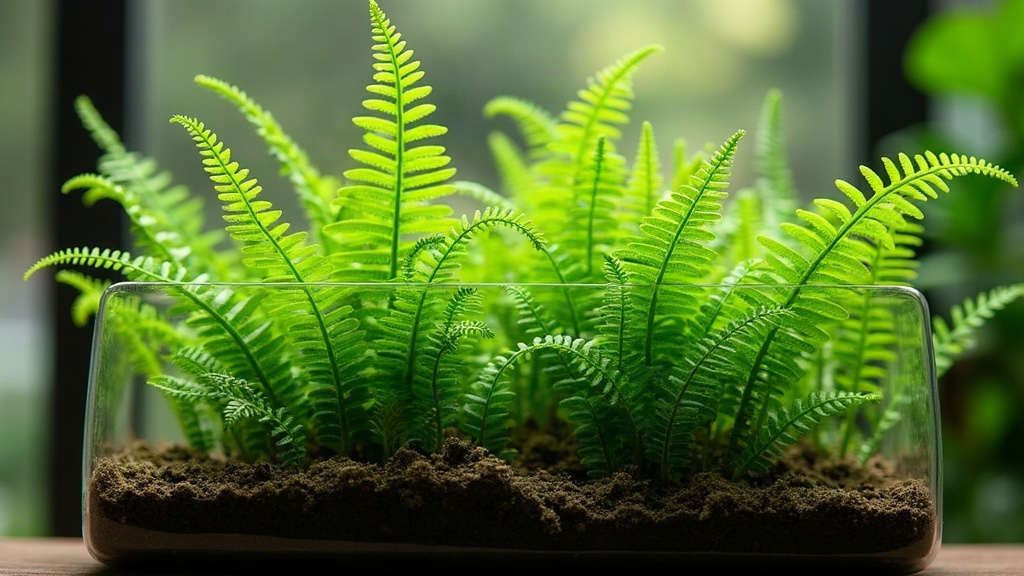
If your apartment only gets a sliver of light through a north-facing window, or your desk sits nowhere near a bright spot, miniature ferns might be the one plant group that actually wants that setup. A handful of species evolved on shaded forest floors and genuinely prefer filtered, indirect light. No grow lights required. Here’s a rundown of the best low-light fern choices, why they do so well in glass enclosures, and what it takes to keep them thriving for the long haul.
Why Ferns Work So Well in Low-Light Terrariums
Ferns, by and large, are understory plants. Out in the wild, they grow under thick tree canopies and make do with just a fraction of the sunlight hitting the forest above. That history is exactly why they adapt so well to:
- Closed or semi-closed terrariums, where glass diffuses whatever light gets in
- Apartments with limited window exposure, think north-facing rooms or shaded corners
- High-humidity microclimates, since ferns rely on moisture to stay turgid and green
Succulents stretch and flowering tropicals fade when light runs short, but ferns don’t do that. They just slow down and stay compact, which happens to be exactly what you want in a small jar where nobody’s hoping for a plant to outgrow its home.
Top Miniature Fern Picks
1. Button Fern (Pellaea rotundifolia)
Compact, slow to grow, with round leathery leaflets that look almost like coins. It handles a dip in humidity better than most ferns do, so if you forget to mist for a few days, it won’t sulk the way others will.
2. Baby’s Tears Fern — Selaginella kraussiana (Spikemoss)
Not technically a fern (it’s a spikemoss), but in terrarium circles it gets treated like one and sold right alongside them. It spreads into a dense, mossy carpet and tolerates deep shade better than nearly anything else you’d put in a jar.
3. Lemon Button Fern (Nephrolepis cordifolia ‘Duffii’)
A dwarf cultivar from the Boston fern family, with small round fronds. Stays under 6 inches in a terrarium setting, and if you brush your fingers against it, you’ll catch a faint citrus smell.
4. Bird’s Nest Fern, Dwarf Variety (Asplenium nidus ‘Dwarf’)
Make sure you’re getting the true dwarf cultivar here. Regular bird’s nest ferns will blow past a small enclosure in no time. The rosette shape gives nice structure next to mosses and low trailing plants.
5. Maidenhair Fern (Adiantum species, compact cultivars)
Delicate looking, and it needs the humidity to match. This one belongs in a closed terrarium where moisture stays consistently high. Put it in anything open or dry and it’ll wilt within a day or two.
6. Rabbit’s Foot Fern (Humata tyermanii), miniature form
People grow this one for the rhizomes as much as the fronds, fuzzy, silver-brown, and they creep along the soil surface. Gives a nice textural contrast against typical fern foliage.
Setting Up Your Low-Light Fern Terrarium
Container type: Closed or mostly-closed glass works best here, cookie jars, apothecary jars, fish bowls with lids. These trap humidity, and that’s the trade-off that makes up for the lack of bright light, since ferns care a lot more about moisture than they do about sun.
Substrate layering:
- Drainage layer, pebbles or LECA (1-2 inches)
- Activated charcoal, a thin layer to keep odor and mold in check
- Substrate, a well-draining terrarium mix with peat or coco coir
- Moss layer (optional), sphagnum moss helps hold surface moisture
Light placement: Keep the terrarium 3 to 6 feet from a window with indirect light, or just somewhere in a room that gets ambient daylight. Direct sun is the enemy here, it’ll scorch fronds and cook a closed glass container from the inside. Skip windowsills that catch afternoon sun entirely.
Watering: Mist lightly once a week if it’s closed, and keep an eye on condensation. Glass fogging up every single day? Back off the misting. Too much moisture breeds mold faster than it helps the ferns.
Common Mistakes to Avoid
- Overcrowding: Even dwarf ferns need breathing room to send out new fronds, leave 2-3 inches between plants.
- Using full-size fern varieties: Look for “dwarf,” “mini,” or named cultivars like ‘Duffii’. Standard varieties will blow past a terrarium’s limits within months.
- Ignoring air exchange: A fully sealed jar with zero venting can trap too much humidity, and that leads to fungal problems even in ferns that love shade.
Final Thoughts
No grow lights, no sunny window required, just the right species. Button ferns, dwarf bird’s nest ferns, and spikemoss varieties are forgiving choices for anyone working with indirect or low light at home. Pay attention to humidity and gentle, filtered brightness rather than chasing light intensity, and your miniature fern garden will stay green, compact, and low-maintenance for years.