Create a Halloween Black Moss Terrarium With Dark Foliage Plants
Why a Black Moss Terrarium Works for Halloween
Walk into any big-box store in October and the shelves tell the same story every year. Plastic skeletons. Foam tombstones. Orange string lights that end up in a bin by November 2. A terrarium is the opposite of all that. It’s alive, it gets better with time, and it works as year-round moody decor rather than a two-week holiday prop.
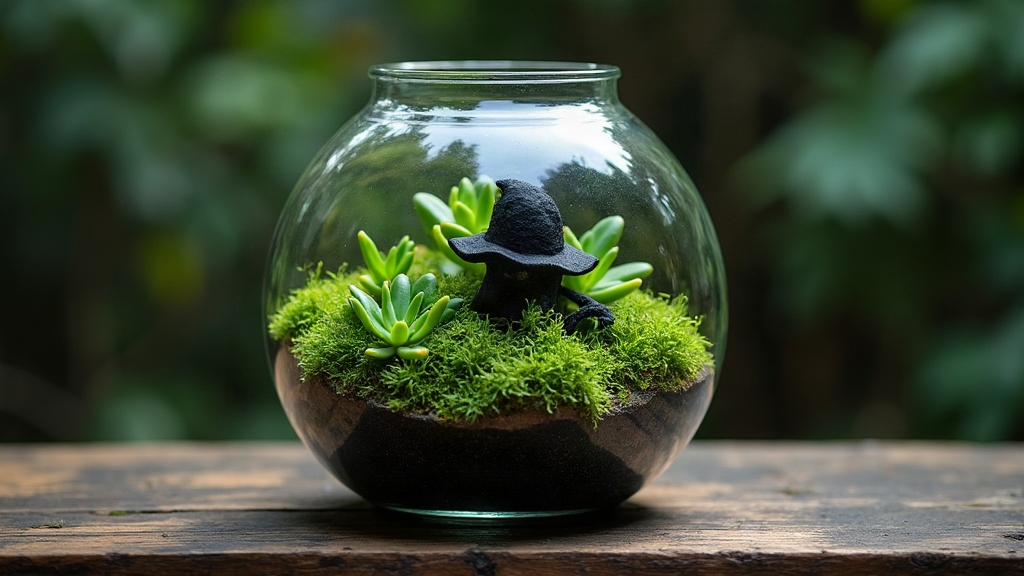
Now for the honest part about “black” moss: true pitch-black live moss doesn’t exist in nature, and no nursery sells it because it can’t be grown. What you’re actually doing is layering preserved black reindeer moss, which is dyed, stable, and holds its color for years, with deep-green live mosses that read as nearly black in low light. Then you finish the look with foliage plants in burgundy, near-black green, and dark purple. Together they create the illusion of a gothic forest floor that happens to be photosynthesizing.
What You’ll Need
Pull these together before you start. Most items are under $10 or already sitting in a garden shed. All in, you can build the whole thing for under $40.
- Glass vessel: a cloche, apothecary jar, or lidded fishbowl. Closed lids trap humidity, which the dark mosses crave.
- Drainage layer: pea gravel or LECA clay balls, roughly a quarter of the vessel’s height.
- Charcoal: activated horticultural charcoal. A thin sprinkle keeps the soil sweet and fights mold before it starts.
- Substrate: a terrarium mix of coco coir, sphagnum, and perlite. Regular potting soil is too heavy and will go sour.
- Moss: preserved black reindeer moss plus live sheet or mood moss.
- Dark foliage plants: two or three small specimens (full list below).
- Decor: mini pumpkins, a tiny skull, black pebbles, or a battery LED candle.
Best Dark Foliage Plants for Terrariums
The golden rule is simple: pick small plants that actually like humidity and stay compact. A plant that doubles in size every month will outgrow the glass by Christmas.
- Cryptanthus ‘Black Mystic’, a dark, ruffled bromeliad that loves terrarium humidity and stays under 6 inches.
- Peperomia caperata ‘Burgundy’, deeply ribbed leaves in dark maroon and near-black green. Slow growing, so it holds its shape and tops out around 8 inches.
- Fittonia ‘Red Anne’, a nerve plant with dark leaves and crimson veins. It droops dramatically when thirsty, which is a built-in watering alarm.
- Selaginella ‘Peacock’, an iridescent dark-blue-green fern ally that thrives in closed terrariums.
- Oxalis triangularis, striking triangular purple leaves that fold down at night, like a plant going to sleep.
- Pellionia repens, a trailing plant with dark green-and-purple leaves that cascades over rocks and down the glass.
Avoid succulents and most cacti. They rot in high humidity and are the number-one cause of failed terrariums. If you’ve ever opened a terrarium to find a mushy, translucent jade plant, you know the smell.
Choosing Your Black Moss
Moss selection is where the whole look succeeds or falls flat. Here’s the short version:
- Preserved black reindeer moss (Cladonia), dyed, not alive, but holds its shape and color for years. This is your “black” statement layer.
- Live mood moss (Dicranum), deep green cushions that read as almost black in low light. The workhorse of the dark mass.
- Live sheet moss (Hypnum), a fine carpet for covering soil and rocks.
- Live cushion moss (Leucobryum), puffy, pale-green mounds that pop against the dark plants.
Layer them instead of mixing them evenly. Dark reindeer moss as accents, mood moss as the main dark mass, and a touch of cushion moss for light contrast. The contrast is what makes the black read as black.
Step-by-Step Build
- Clean the vessel with warm water and dry it fully. Leftover moisture under the layers is how mold gets a head start.
- Add drainage. About 1 to 2 inches of gravel or LECA. This is your reservoir, not your problem.
- Sprinkle charcoal. A thin layer right over the drainage.
- Add substrate. 2 to 3 inches of moist terrarium mix. Dampen it first so it feels like a wrung-out sponge.
- Plant the foliage. Make small holes, settle the roots, and press soil gently around each plant. Taller plants go toward the back, trailing plants near the edges where they can spill over.
- Place the moss. Tuck live moss around the plants and add black reindeer moss as dark accent patches. Think of it like shading a drawing.
- Add decor. A mini skull, tiny pumpkins, or black stones. Keep it minimal so the plants stay the focus. Two or three pieces max.
- Mist and seal. Mist lightly with distilled water, then close the lid or cloche.
Care and Maintenance
A closed terrarium mostly looks after itself, but it’s not zero-effort. Here’s the routine that keeps it healthy past Halloween and into spring:
- Light: bright, indirect light only. Direct sun cooks a closed terrarium in under an hour, and once the leaves scorch they don’t come back. A north or east window is ideal.
- Water: mist when condensation disappears from the glass. If the glass stays fogged all day, you’ve overdone it, so open the lid for a few hours.
- Air circulation: open the vessel for about 30 minutes once a week to refresh the air. This one habit prevents most mold problems.
- Trim: pinch back leggy growth so the scene stays tidy and miniature. A terrarium is a bonsai mindset, not a jungle.
- Troubleshoot: remove any yellowing leaves the moment you spot them. White fuzzy mold means too much moisture, so open the lid, pull out the affected moss, and dab the spot with a cotton swab dipped in 3% hydrogen peroxide.
Styling Ideas for a Gothic Look
- Use black river stones as a “graveyard” path winding between the plants.
- Add a mini resin skeleton hand reaching out of the moss, half buried.
- Tuck a small battery-operated black candle beside the vessel for flickering light at night. The glass catches it beautifully.
- Set a cloche on a dark wooden base for an instant witchy centerpiece that needs zero extra effort.
Conclusion
A Halloween black moss terrarium gives you eerie, living decor that outlasts the season and keeps improving with age. Pair preserved black reindeer moss with humidity-loving dark foliage like Cryptanthus ‘Black Mystic’ and Peperomia ‘Burgundy’, keep the vessel bright, moist, and well-ventilated, and the whole thing nearly runs itself. Give it a month and the live moss will perk up while the plants settle in. Build one this October and you’ll have a low-maintenance piece of gothic greenery that keeps its spooky charm all year long.