Why Is My Terrarium Moss Growing Algae After Using Fertilizer?
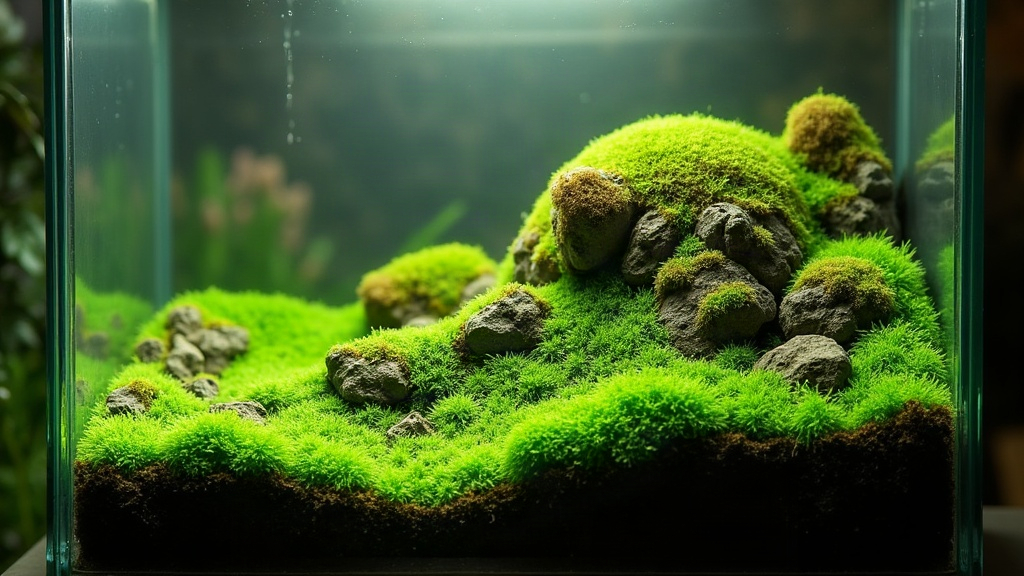
If your terrarium moss suddenly turned into a slimy green mess or sprouted fuzzy algae patches right after you fed it, well, the fertilizer is almost certainly to blame. Moss doesn’t need that nutrient boost to survive. Algae, on the other hand, loves it. Drop fertilizer into a humid, closed-off terrarium and you’ve basically mixed the perfect cocktail for an algae bloom.
Why Fertilizer Causes Algae, Not Healthier Moss
Moss is a non-vascular plant, which matters more than people realize. Unlike ferns or succulents, it has no roots pulling nutrients up from soil. Instead, it absorbs moisture and minerals straight through its leaf-like structures (called phyllids), pulling from rainfall, dew, and whatever’s floating in the air. A few things follow from this:
- Moss almost never needs added fertilizer to survive, let alone thrive.
- Algae explodes the moment it gets extra nitrogen, phosphorus, and potassium, which happen to be exactly the nutrients packed into most liquid and granular plant fertilizers.
- Inside a closed or semi-closed terrarium, those nutrients have nowhere to go. No rain washes them away, no soil dilutes them. They just sit in standing moisture, getting recycled every time the system “rains” from condensation on the glass.
So when you fertilize moss, you’re not actually feeding the moss. You’re feeding the algae spores that were already lurking in the substrate, the water, or even on the moss itself, just waiting for a reason to multiply.
The Three Ingredients Algae Needs (and Your Terrarium Has All of Them)
- Light - terrariums usually sit near a window or under a grow light.
- Moisture - high humidity is the entire point of a terrarium.
- Nutrients - which your fertilizer just handed over on a silver platter.
Take away any one of these three and algae starts to struggle. Add fertilizer, though, and you’ve just turbocharged the one variable that was keeping it in check before.
How to Fix an Algae Outbreak
1. Stop fertilizing immediately
No more nutrients, full stop. Let whatever excess is already in there get used up or flushed out.
2. Do a partial water change or rinse
Got standing water or a drainage layer? Flush it with distilled water. This cuts down the nutrient concentration that’s basically feeding the algae a buffet.
3. Manually remove visible algae
- A soft brush, a cotton swab, or tweezers work fine for gently lifting algae film off moss surfaces.
- For the stubborn patches, try a diluted hydrogen peroxide spray, roughly 1 part 3% peroxide to 4 parts water. It kills algae without hurting most moss species, but test a small patch first before going all in.
4. Reduce light exposure temporarily
Pull the terrarium away from direct sunlight for about 5 to 7 days, or cut grow-light hours down to 6 a day. This starves the algae out while moss, which tolerates shade far better, keeps chugging along just fine.
5. Improve airflow
If the terrarium is sealed tight, crack the lid or vent it for a few hours each day. Stagnant, saturated air feeds algae growth a lot more than it helps moss.
Should You Ever Fertilize Terrarium Moss?
Honestly, in most cases, no. If your moss looks pale, thin, or just refuses to spread, the real problem is usually one of these:
- Not enough humidity (most moss wants 80%+ ambient humidity, which is higher than people expect)
- Wrong light spectrum (moss wants indirect or diffused light, never direct sun)
- Substrate that doesn’t hold moisture well (moss does best on sphagnum, pH-neutral soil, or damp stone, not some nutrient-rich potting mix)
If you absolutely feel you must supplement, go for an extremely diluted, nitrogen-free product made specifically for mosses or bryophytes. Apply it no more than once every 2 to 3 months, and only as a fine mist. Never pour it directly onto the substrate.
Preventing Algae Long-Term
- Use distilled or RO (reverse osmosis) water instead of tap water, since tap water often carries phosphates that feed algae directly.
- Don’t overwater. Moss wants humidity in the air, not standing moisture pooling around it.
- Keep the terrarium out of direct sun. Bright, indirect light does the job just as well.
- Bring in a small cleanup crew, like springtails or isopods. They’ll naturally chew through algae and organic debris for you.
Conclusion
An algae bloom right after fertilizing isn’t bad luck, it’s basic chemistry playing out between added nutrients and a warm, moist, well-lit terrarium environment. The upside? It’s fixable. Stop fertilizing, dilute the nutrient load, clean off the affected spots by hand, and adjust your light and airflow. Moss almost never needs feeding to do well, so in most setups, the simplest move is skipping fertilizer entirely and keeping your terrarium green the right way: mossy, not slimy.