Autumn Woodland Terrarium With Mini Ivy & Leaf Litter
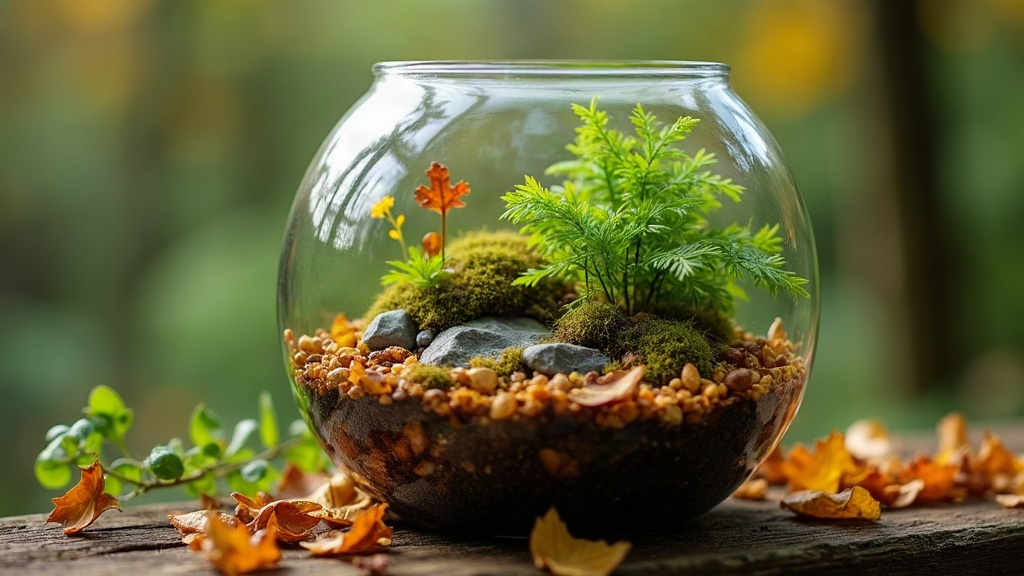
An autumn woodland terrarium is basically a forest floor shrunk down to fit on a shelf: rust-colored leaves, a trail of ivy, a few mossy stones, and that quiet, earthy feeling you get walking through the woods in early October, except it’s sealed in glass and will still look good in February. This guide walks through every layer, every material, and every planting decision so what you end up with reads as a tiny forest scene, not just a jar with some plants crammed into it.
Why Choose an Autumn Woodland Theme
Most terrarium tutorials push you toward tropical greenery, bright pops of color, glossy leaves. A woodland terrarium goes the other way: deep greens, amber, copper, soft brown. It’s a particularly good project for October because you can actually walk outside and collect real fallen leaves, acorn caps, and twigs from your own yard, then preserve them so the display doesn’t just rot away in a week.
This style also works well as:
- A tabletop centerpiece for fall gatherings
- A low-light desk accent (ivy and moss don’t mind shade at all)
- A longer-lasting alternative to cut flowers or carved pumpkins
What You’ll Need
- A clear glass container with a lid or wide opening (apothecary jars, fishbowls, glass cloches, all of these work fine)
- Activated charcoal (keeps mold and odor in check)
- Horticultural gravel or small pebbles for drainage
- Sphagnum moss, used as a barrier layer
- Well-draining potting mix, ideally one formulated specifically for terrariums
- Miniature or dwarf ivy, such as Hedera helix ‘Needlepoint’ or ‘Duckfoot’ (compact varieties like these stay proportionate in a small container, standard ivy won’t)
- Preserved leaf litter: glycerin-preserved oak, maple, or beech leaves hold their color and stay pliable instead of crumbling to dust
- Decorative extras: small bark pieces, acorns, dried mushrooms, tiny pinecones
Building the Layers
1. Drainage Base
Start with 1-2 inches of pebbles or gravel at the bottom. This keeps roots out of standing water, and standing water is probably the single most common reason terrariums fail.
2. Charcoal Layer
Add a thin layer of activated charcoal right on top of the drainage stones. It filters the water that pools underneath and stops the whole setup from going sour over time.
3. Moss Barrier
A layer of sphagnum moss keeps soil from washing down into your drainage layer while still letting water pass through it. Skip this and you’ll end up with a muddy mess settling into the gravel within a month.
4. Soil Layer
Add 2-3 inches of terrarium-grade potting mix. Light, airy, not too rich, since ivy actually does better with moderate fertility rather than a nutrient-packed soil.
5. Planting the Ivy
Gently loosen the ivy’s root ball and plant it toward the back or side of the container, giving it room to trail over the edge or climb a small piece of bark. Miniature ivy grows slowly indoors, which sounds like a downside but really isn’t: you won’t be pruning it every other week.
6. Adding Preserved Leaf Litter
Scatter the preserved leaves across the exposed soil, roughly the way they’d settle on an actual forest floor (uneven, a bit clumped in spots, not neatly arranged in rows). Tuck a few under the moss and around the base of the ivy for that lived-in look. Preserved leaves won’t rot or grow mold the way fresh ones do, which matters a lot once your container is closed or half-sealed.
7. Final Details
Finish with a few bark chunks, a small cluster of real or faux dried mushrooms, and one or two acorns for scale. Resist the urge to fill every gap. Overcrowding is what makes a terrarium look like a cluttered jar instead of a scene.
Care and Maintenance
- Light: Bright, indirect light. Direct sun will cook a closed glass container faster than you’d think.
- Water: Mist lightly every 1-2 weeks if the container is open; closed terrariums often only need water once a month.
- Ventilation: Heavy condensation building up on the glass? Pop the lid off for a few hours and let it breathe.
- Pruning: Trim ivy tips now and then so it doesn’t swallow the preserved leaf layer underneath.
Common Mistakes to Avoid
- Skipping the charcoal layer. This is the number one reason terrariums start smelling musty.
- Using fresh, unpreserved leaves. They break down fast and invite mold the moment humidity builds up in an enclosed space.
- Overwatering. A woodland terrarium should look lush on minimal moisture; soggy soil kills ivy roots within days.
- Picking an oversized ivy variety. Standard English ivy will outgrow a small jar in no time. Stick with a dwarf or miniature cultivar.
Final Thoughts
A woodland terrarium rewards you twice over: real plant care on one hand, seasonal styling on the other, and somehow it keeps that crisp early-fall mood going well past the point when the actual leaves outside have turned to mush on the sidewalk. Get the layering right, pick a miniature ivy, use preserved leaf litter instead of fresh, and you end up with a forest floor behind glass that asks almost nothing of you and never wilts with the season.