Mini Orchid Terrariums vs Vivarium Cabinets for Bulbophyllum
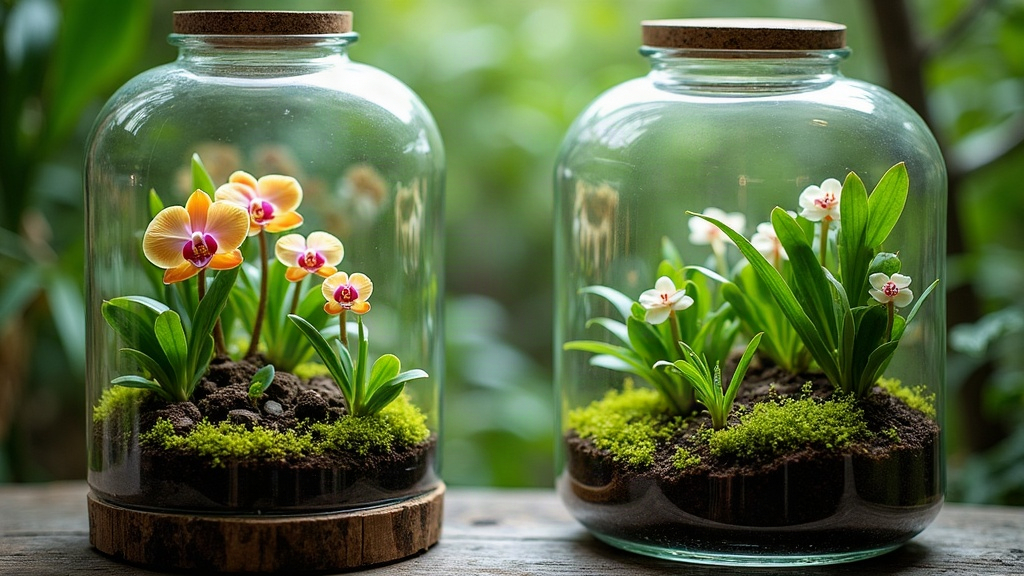
Mini Terrarium or Vivarium Cabinet: Which One Actually Works for Bulbophyllum?
Mini orchid terrariums are small, glass boxes, sometimes sealed, sometimes cracked open a bit, that suit a handful of compact Bulbophyllum species just fine. Vivarium cabinets are a different animal entirely: bigger, actively managed setups built for growing a real collection over the long haul. Which one you need comes down to three things, really: how many plants you’re after, what you’re willing to spend, and how fussy your particular species turn out to be about climate.
Bulbophyllum happens to be one of the largest orchid genera out there, and the size range within it is almost comical. On one end you’ve got Bulbophyllum minutissimum, barely bigger than a fingernail. On the other, the sprawling, famously stinky Bulbophyllum phalaenopsis. Picking the right environment matters more here than with almost any other orchid genus, mostly because a lot of these plants evolved in microclimates that stay humid around the clock with constant air movement. Your average windowsill or living room just can’t fake that.
What Makes Bulbophyllum Different
Most species in this genus want a few specific things, non-negotiably:
- High humidity (60-90%), and it often needs to stay there pretty much all day
- Strong air circulation, otherwise fungal and bacterial rot creeps into those thin pseudobulbs and leaves
- Bright, indirect light, not direct sun blasting through a window
- Consistent root moisture without ever going waterlogged, since most of these are epiphytes clinging to bark, not soil dwellers
This combination is exactly why growers end up building enclosed setups instead of just lining pots along a windowsill.
Mini Orchid Terrariums: Pros and Cons
Think of a mini terrarium as a glass tank or large jar, usually 5 to 20 gallons, sometimes with a lid, sometimes with just enough ventilation gaps to keep air from going completely stale.
Pros:
- Cheap to start. You can often put one together for under $100 counting the glass and basic lighting
- Fits on a desk, a bookshelf, pretty much anywhere
- Perfect for showing off one to three miniature species, say Bulbophyllum lobbii or Bulbophyllum careyanum
- Misting is simple. Once or twice a day with a hand sprayer and you’re done
Cons:
- Humidity bounces around a lot if there’s no fan or automated misting
- Still air is a real problem. Rot risk climbs fast in bushier or broader-leafed species
- Root space is tight, which limits how big mounted specimens can get
- Small glass volumes heat up fast under grow lights, and temperature spikes are hard to control
A mini terrarium is really an entry point. If you’re not sure Bulbophyllum culture is even for you yet, this is where you find out before spending real money.
Vivarium Cabinets: Pros and Cons
A vivarium cabinet is a different scale of commitment: often custom-built, 24 to 48 inches wide or more, with fans wired in, misting or fogging systems, LED lighting, and in some setups, full automation running the whole show.
Pros:
- Humidity stays stable. Hold it at 70-80% without much effort once a fogger or ultrasonic mister is dialed in
- Active airflow from computer fans cuts rot risk dramatically compared to still air
- Plenty of room to mount several species on cork bark or tree fern slabs, closer to how they’d actually grow in the wild
- Can handle bigger or clumping growers like Bulbophyllum frostii or Bulbophyllum rothschildianum, species a mini terrarium just can’t accommodate
- Automation means you’re not standing there with a spray bottle every single day
Cons:
- Costs add up. Expect anywhere from $300 to over $1,000 depending on how automated you go
- There’s a learning curve: wiring fans, setting up controllers, sorting out drainage
- Takes up real floor or furniture space, not something you tuck into a corner of a desk
- Misting systems need periodic cleaning, or algae and mineral deposits build up fast
Which Setup Fits Your Goals?
Go with a mini terrarium if:
- You’re keeping it small, one to three miniature Bulbophyllum species
- Budget is the priority and you want the cheapest entry point
- You’re fine checking in daily, misting by hand or keeping an eye on conditions
Go with a vivarium cabinet if:
- You’re building toward five or more species and growing the collection over time
- You’d rather automate humidity and airflow than manage it manually
- You’re growing larger or more humidity-demanding types, Section Cirrhopetalum species being a good example
A Hybrid Approach
A lot of growers I’ve talked to (and plenty you’ll find in orchid forums) start small: a mini terrarium to get a feel for humidity swings and airflow basics. Then, once the plants outgrow the space, or once the collecting bug really bites, they move up to a vivarium cabinet. It’s a natural progression. Some growers even keep the old terrarium around afterward, repurposed as a quarantine box for new plants before they get introduced into the bigger cabinet system. That’s a smart move, honestly, since it keeps pests and disease from spreading into an established collection.
Final Thoughts
If all you want is a shelf display of a few charming miniature Bulbophyllum, a mini terrarium does the job, and it won’t break the bank. But if you’re serious about this genus over the long term, especially the species that demand rock-steady humidity and real airflow, a vivarium cabinet is going to give you far more consistent results. Start small if you’re just curious. Go bigger once you know you’re committed.